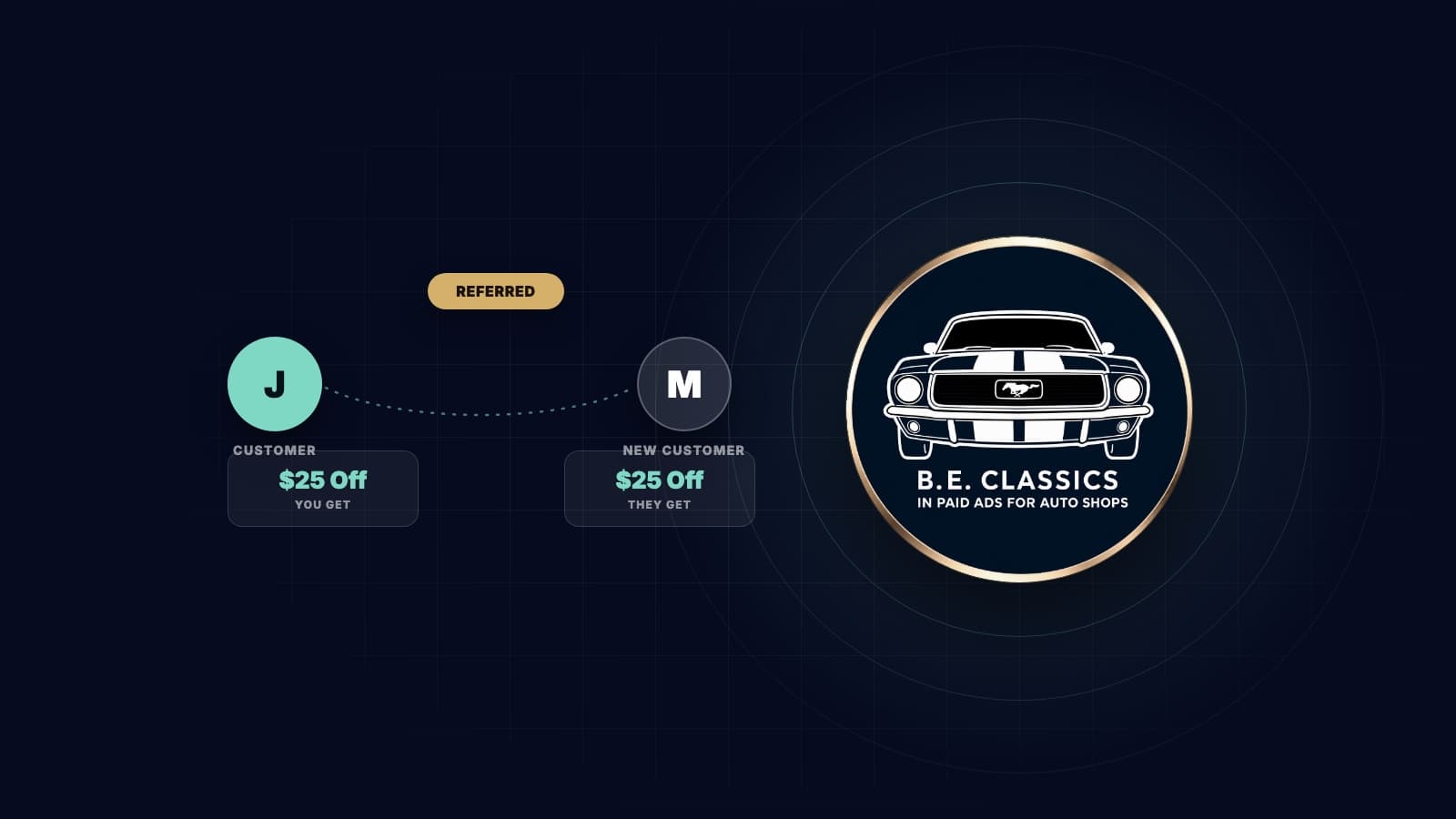
Word of mouth has always been the best advertising a repair shop can get. Someone trusts their neighbor's opinion about a mechanic more than any ad, no matter how well the ad is targeted, an algorithm has never once fixed anyone's brakes. The problem is that word of mouth on its own is slow and completely out of your hands. A referral program doesn't replace it, it just gives it a nudge and a reason to actually happen this week instead of eventually.
Here's how to set one up without it feeling like a coupon gimmick.
Why referrals work especially well for a repair shop
Auto repair is a trust purchase. Nobody wants to hand their car, and a few hundred dollars, to someone they're not sure about. A referral from a friend skips that whole trust-building process in one sentence: "Go see the guys at [your shop], they're honest and they won't upsell you." That single sentence does more than a month of ad impressions, because it's coming from someone with nothing to gain by lying, unlike, say, a five-star review posted by the owner's cousin.
The math also tends to work in your favor. Referred customers usually cost you far less to acquire than an ad-driven one, and they tend to stick around longer, since they arrived already trusting you instead of testing you out.
The simplest structure: give something, get something
The programs that actually get used are almost always the simple "give and get" kind: the person referring gets something, and the new customer gets something too.
- "Give $25, get $25." The referring customer gets $25 off their next service, and the new customer gets $25 off their first visit.
- A free service tier. Refer three friends, get a free oil change. Simple to explain, simple to track.
- A flat discount for both. 15% off for both people on their next visit works well if a dollar amount feels awkward for your pricing.
Whatever you pick, keep it to one offer. A referral program with four tiers and fine print is a referral program nobody remembers to use, and the shop equivalent of a rewards card with an expiration date nobody can find.
How to actually get people to use it
Having a referral program and having people who know about it are two different things. The program has to be mentioned at the moment it's most likely to work, which is right when a customer is happiest with you.
- Mention it at pickup, when the car's fixed and the customer's relieved, the same moment that works best for asking for reviews.
- Put it on the receipt or invoice, so it's still in their hands after they've left.
- Give them something to physically hand over. A simple referral card with your shop's name and a code is easier to pass along than "just tell them my name."
- Text or email past customers who haven't heard about it yet. A one-time announcement to your existing list costs nothing and reaches people who already trust you.
Track it, or it doesn't exist
The most common way a referral program quietly dies is that nobody's tracking who referred whom, so nobody ever actually gets their reward, and the whole thing fades out from neglect within a few months, the marketing version of a gym membership nobody cancels but nobody uses either.
A simple system works fine. A referral code, a note in your scheduling software, even a notebook by the front desk, anything that reliably connects a new customer back to whoever sent them. The tracking matters more than the technology behind it.
Common mistakes
- Making the offer too small to mention. A 5% discount isn't worth the conversation it takes to explain it.
- Making the offer too complicated. If you have to explain it twice, it's too complicated, and nobody's rereading your receipt for fun.
- Forgetting to follow up. If a customer refers someone and never hears whether it worked, they won't bother a second time.
- Only asking once. A referral program isn't a one-time announcement, it's something worth mentioning every few months to keep it top of mind.
A quick example
Say you offer $25 off for both sides, and ten customers each refer one friend over a quarter. That's ten new customers for $250 in total discounts, spread across those same ten repair orders. If your average repair order is $350, that's likely a good trade even before counting what those new customers spend on their next visit, and the one after that.
Where to start this week
- Pick one simple offer and write it in one sentence.
- Make something physical or digital to hand customers, a card, a text template, a line on the receipt.
- Mention it at pickup for the next ten customers.
- Set up a simple way to track who referred whom, even if it's just a shared spreadsheet.
Want a second set of eyes?
A referral program works best alongside the ads and search visibility that bring in the customers who'll eventually refer their friends. B.E. Classics builds Google and Facebook campaigns exclusively for auto repair shops, with clear reporting on what's working, and no long-term contracts.
If you'd like a free look at your shop's marketing, book a free Google audit below.